
Former primary teacher · Edinburgh, Scotland
From the classroom to a creative practice.
Amanda talks about recognising the design instinct she had been using for years.
Read Amanda’s storyDifferent backgrounds. Different starting points.
Get to know the people making room for design.
“I spent seventeen years building a career that made sense to everybody else. The one I'm building now finally feels like mine.”
After 17 years in pharmaceutical work, Rachael describes choosing a creative direction of her own.
Read Rachael’s storyWatch an interview.
Read the story behind it.
Amanda talks about recognising the design instinct she had been using for years.
Read Amanda’s storyGeorgia shares her experience of beginning a new chapter after years focused on family.
Read Georgia’s storyHeather’s published story explores moving from finance into interior design.
Read Heather’s storyEmma describes the move from brand management to working as a designer.
Read Emma’s story Sage HartmannRead case study
Sage’s case study follows her move from marketing into running a design studio.
Read Sage’s story Norah HamiltonRead case study
Norah’s case study follows the step from helping friends to starting a consultancy.
Read Norah’s storyThese stories are published by the Academy and reflect individual experiences, not typical or guaranteed results. Explore each person’s account and starting point.
Selected excerpts from public reviews.
Explore each person’s full experience on Trustpilot.
“It feels nice to know other individuals are as invested in my project as I am!”Read the full review
“Turns out nights and weekends are plenty if you're disciplined with your time.”Read the full review
“My business coach helped me price it correctly, which makes the difference between just having information and actually implementing them succesfully.”Read the full review
“Despite being online, the course feels incredibly hands-on.”Read the full review
“I now have a portfolio I'm proud of and the skills to back it up.”Read the full review
“The course structure is perfect for beginners like me who are changing careers.”Read the full review
Take a closer look at a supplied portfolio assignment, written feedback and actual Academy resources.
Look inside the Academy Student portfolio example
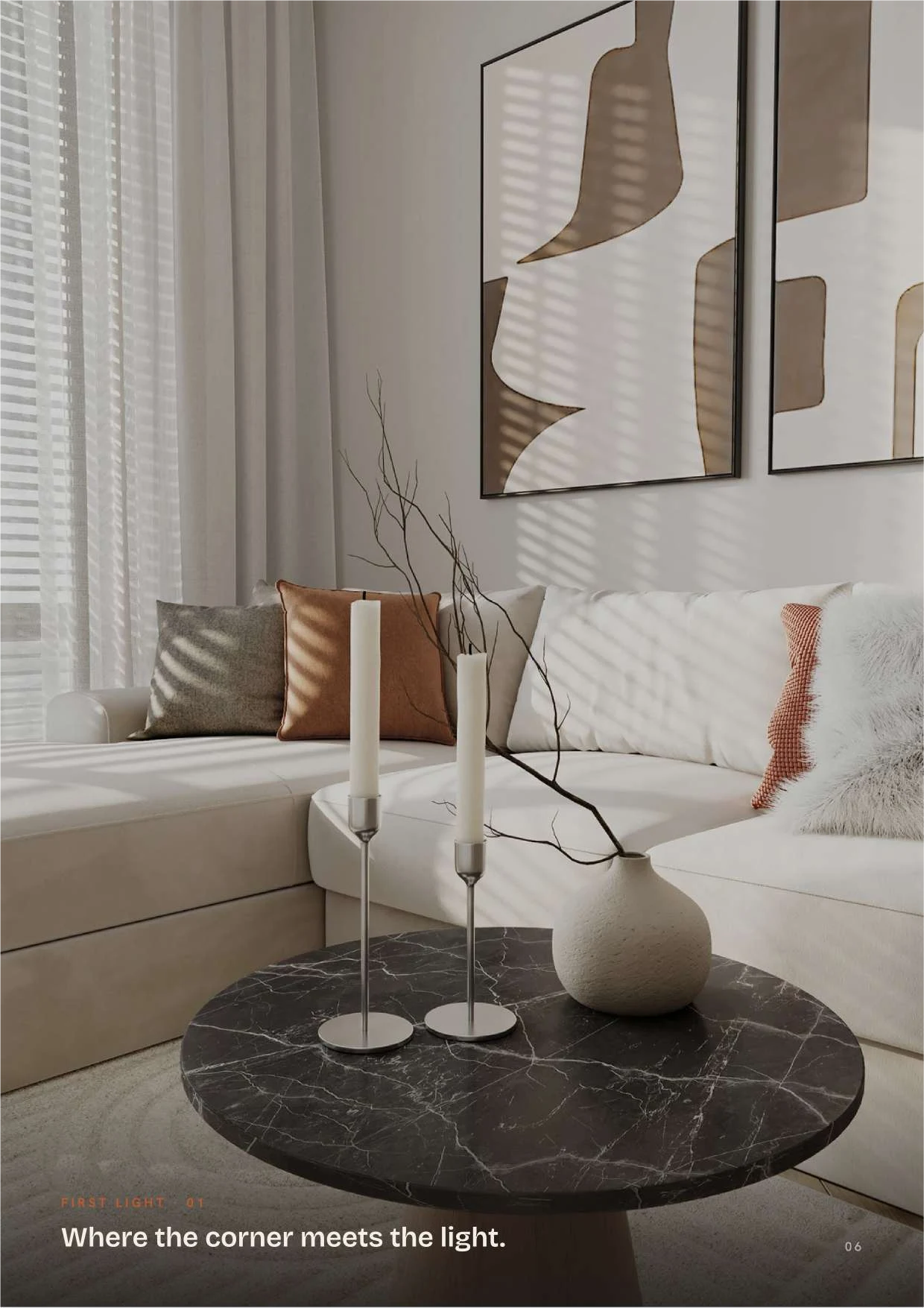 First Light · Portfolio design
Bring your curiosity. Bring your questions.
Let’s see where you could take them.
Selected pages from a supplied student portfolio assignment. These communicate design thinking and visualisation, rather than documenting a completed physical commission.
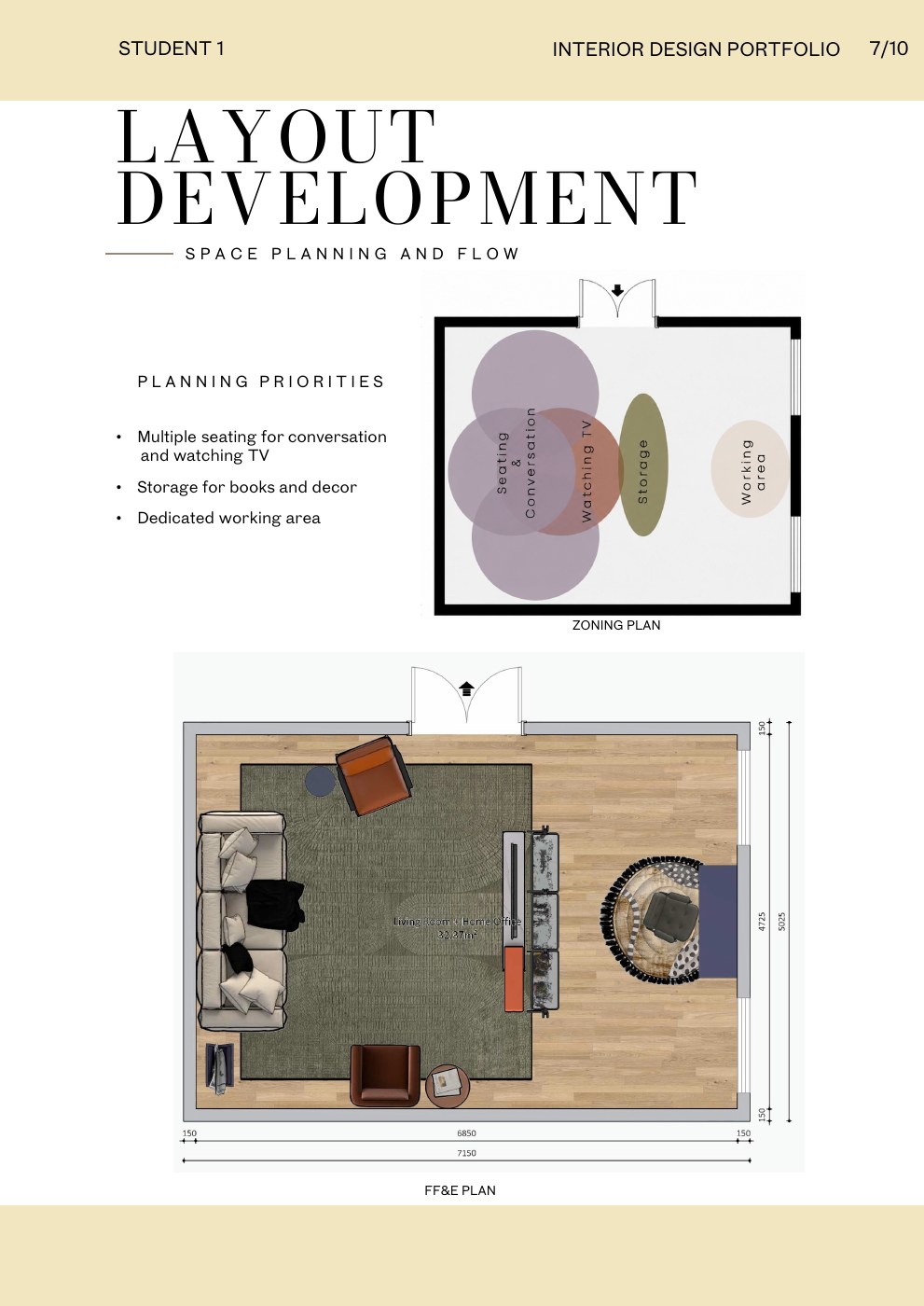
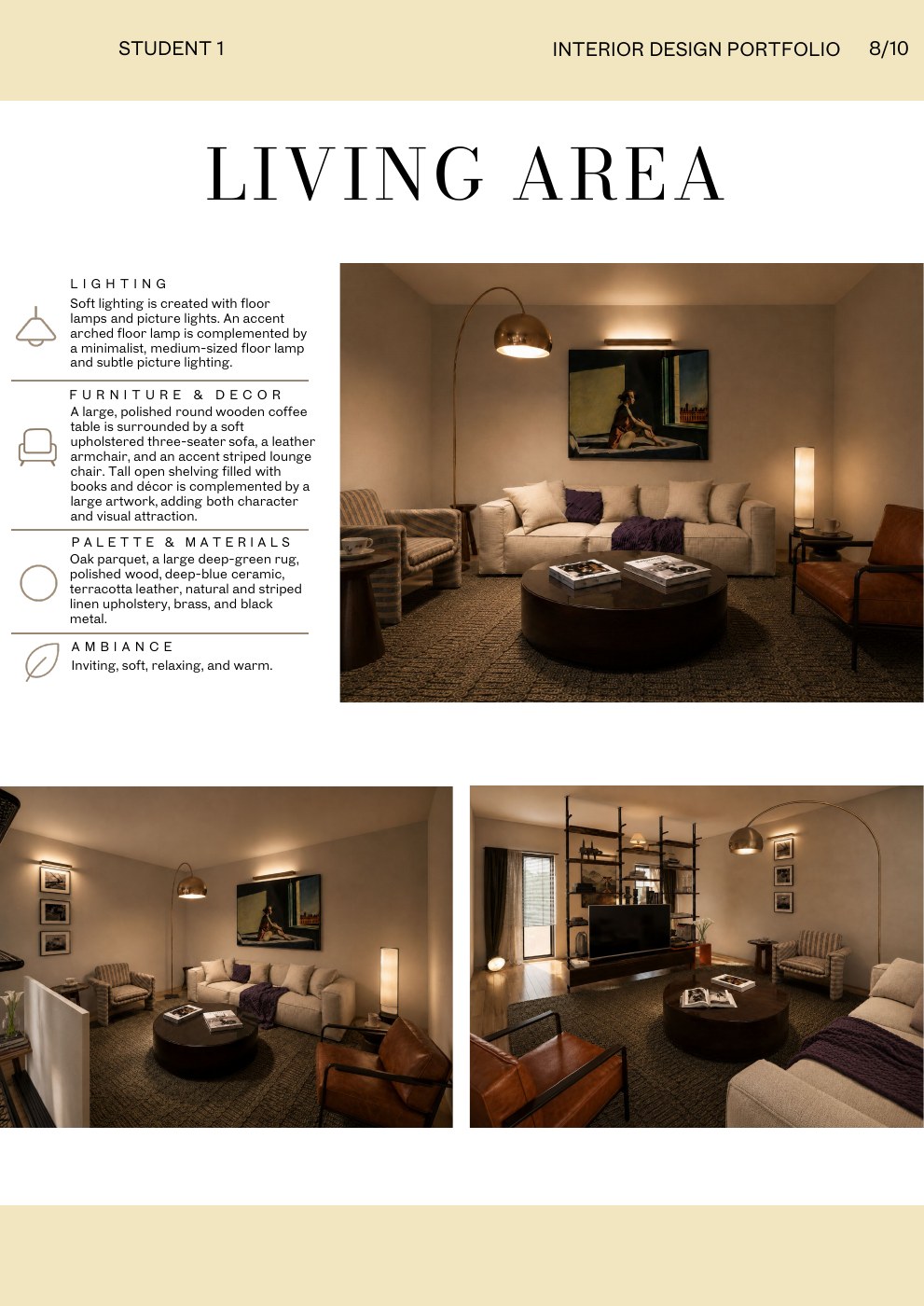
A written response to an interior design styles assignment, transcribed from the supplied Academy conversation.
“Great work! Balanced and neat! 👏 I would recommend adding a side table and window treatment options to cover the main required furniture and decor requests.”
The reviewer acknowledges the work and identifies specific additions for the student to consider.
Personal details are omitted. This feedback comes from a separate assignment.
An actual Academy student resource for working through design-project pricing. This is a view of the Academy’s pricing resource.
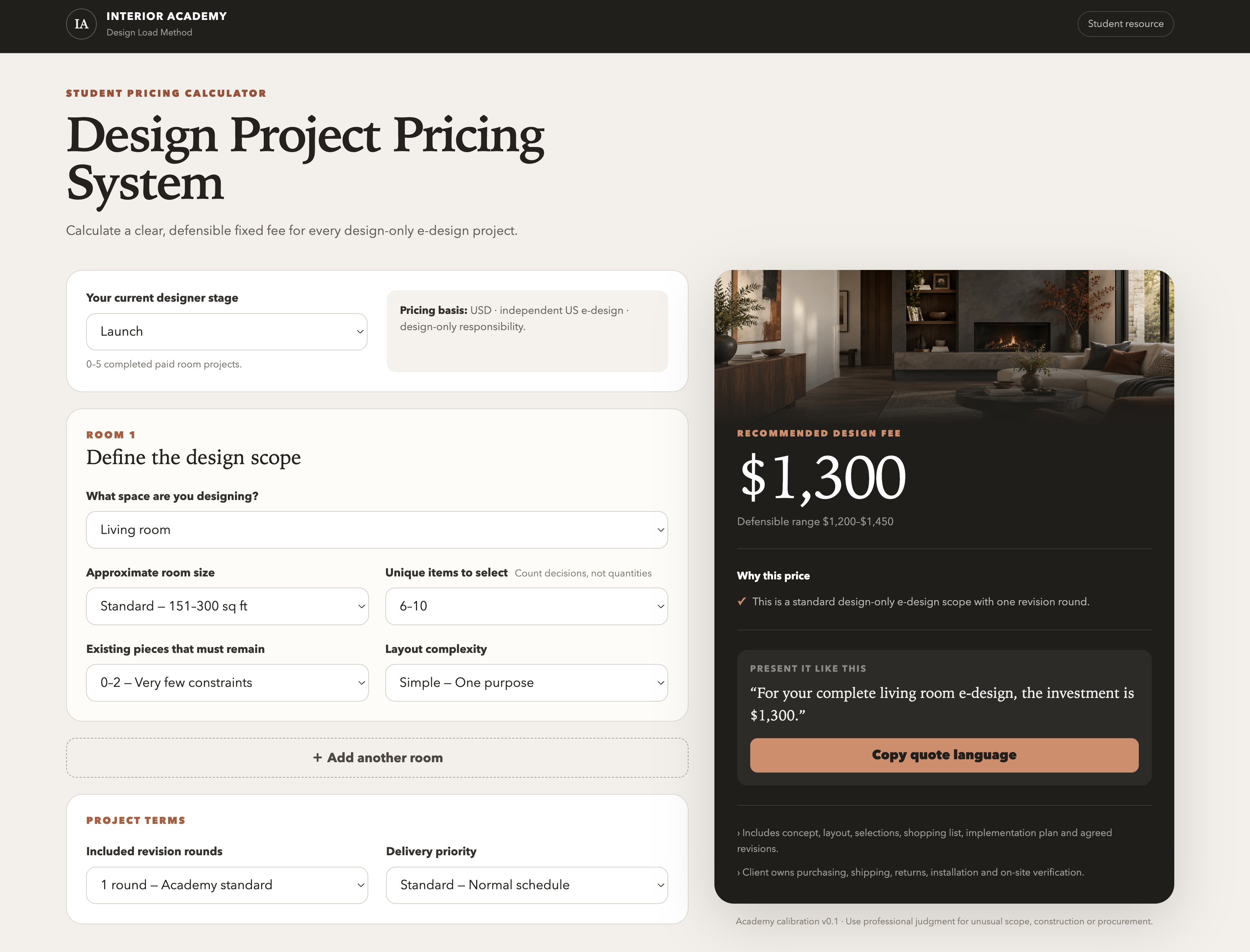
The figures shown are calculator examples, not student earnings, promised client fees or independent market-price evidence.
The supplied message accompanies an interior design styles assignment.
“Interior Design Styles Assignment. I love Milanote, have never used before but it is a wonderful new tool!”
This comment describes the student’s experience using Milanote. It is not presented as a comprehensive review of the program or a financial outcome.
Six months of private mentoring to help you apply what you learn to your designs and your business.
Share your work and questions in your private Circle channel, from room layouts and material choices to positioning and pricing.
Your mentors can respond with written feedback, a personalised video review, or arrange a one-to-one call to work it through.
Use the feedback to refine your work and come back with the next question. You stay involved in the decisions and implementation.
Personal onboarding and a business strategy session are included. Further individual calls are arranged around your needs and progress.
No design degree, portfolio or previous paying clients are required to start.
Follow the foundations, provided briefs and guided project.
Combine self-paced lessons with practical work. Plan around 6–12 focused hours each week.
Strengthen your process, portfolio or the business systems around your practice.
The Academy provides education and guidance. Students remain responsible for study, practical work, implementation and professional decisions.
A closer look at this part of the learning path.
Understand residential interiors and the eDesign process. Develop your eye for colour, pattern, texture, scale, proportion, balance and contrast.
The stages describe a learning path, not fixed weekly deadlines. Progress depends on your starting point and the work you put in.
A closer look at this part of the learning path.
Work through a realistic residential project, from client information to the final delivery package.
The stages describe a learning path, not fixed weekly deadlines. Progress depends on your starting point and the work you put in.
A closer look at this part of the learning path.
Apply the methodology to additional residential briefs, including a one-bedroom apartment, a two-bedroom apartment and a detached-house scenario.
Learn to present the project challenge, design decisions and proposed solution in a professional portfolio. Experienced students may discuss applying the approach to their own projects.
The stages describe a learning path, not fixed weekly deadlines. Progress depends on your starting point and the work you put in.
A closer look at this part of the learning path.
Understand the market, develop your positioning and shape your design services.
Practise client conversations and build the systems that support them.
Advertising and other business expenses are separate from tuition.
Develop the routines, priorities and consistent working habits that support your learning and business implementation.
The focus is on putting the training into practice over time.
The stages describe a learning path, not fixed weekly deadlines. Progress depends on your starting point and the work you put in.